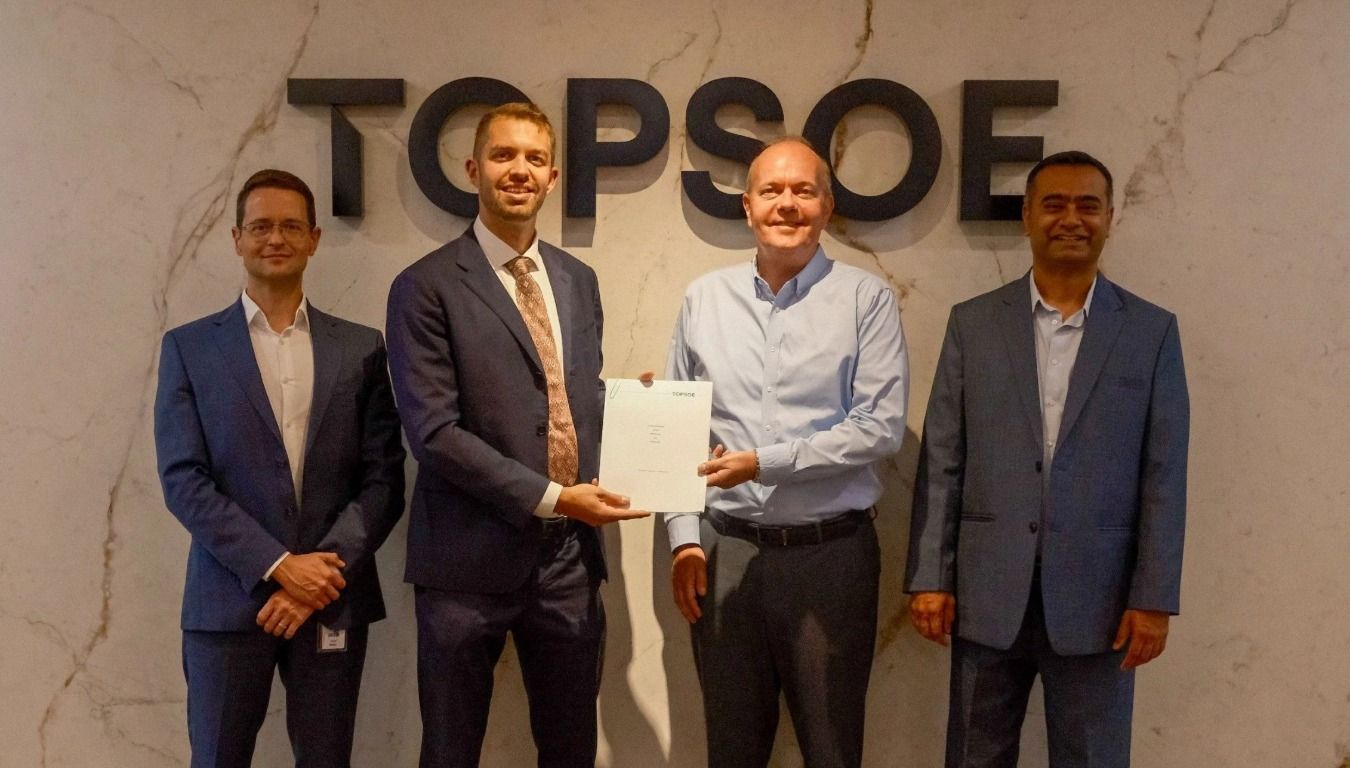
Transition Industries LLC today announced that it has signed a definitive Engineering, Procurement, and Construction (EPC) agreement with Siemens Energy and Techint Engineering & Construction (E&C) for the approximately 210 MW electrolyser facility at its Pacifico Mexinol project in Sinaloa, Mexico. The agreement is subject to customary conditions precedent, including the completion of project financing.
“This agreement brings together Siemens Energy’s electrolysis technology and Techint’s construction capabilities to deliver a critical component of our project and a landmark for renewable hydrogen in the Americas.”
The signing builds on the Front-End Engineering Design (FEED) contract announced in August 2025 and represents an important milestone in advancing the project’s renewable hydrogen production infrastructure from engineering toward construction.
The facility will incorporate Siemens Energy’s Elyzer P-300 electrolyser technology and produce renewable hydrogen to support the production of renewable fuels of non-biological origin (RFNBO) within Pacifico Mexinol’s planned 6130 tpd ultra-low-carbon methanol complex. The technology plays a crucial role in achieving the project’s goals of efficiency, sustainability, and scalability.
“Moving from front-end engineering to a signed EPC agreement is a significant milestone for Pacifico Mexinol,” said Rommel Gallo, CEO of Transition Industries, the parent company of Pacifico Mexinol. “This agreement brings together Siemens Energy’s electrolysis technology and Techint’s construction capabilities to deliver a critical component of our project and a landmark for renewable hydrogen in the Americas. It reflects our continued commitment to developing world-scale infrastructure that can meet growing demand for lower-carbon fuels and chemical products.”
The EPC agreement establishes the next phase of collaboration among Transition Industries, Techint E&C and Siemens Energy, translating the facility’s engineering design into an integrated framework for delivery. Construction is expected to begin in early 2027, subject to satisfaction of the conditions precedent.
“At approximately 210 MW, this hydrogen plant would be Siemens Energy’s largest electrolyser installation in the Americas. The project has the potential to accelerate low-carbon fuel production in the region and advance the global decarbonisation of hard-to-abate industries,” commented Dan Restrepo, Head of Electrolyser Sales Americas.
“We are pleased to continue supporting Pacifico Mexinol in the development of the Project through our alliance with Siemens Energy. We will execute this work with the highest standards of safety, integrity, and transparency, and with respect for the communities and the environment where we operate, contributing to the development of sustainable energy in Mexico”, added Esteban Trouet, Operations Sr. Director for Techint Engineering & Construction-North Region.
Once operational in 2030, Pacifico Mexinol is poised to be the largest standalone ultra-low carbon chemical production facility in the world, the facility will produce approximately 175 000 tpy of RFNBO methanol, 175 000 t of recycled carbon fuel (RCF) methanol and 1.8 million t of ultra-low carbon methanol from natural gas with carbon capture, helping meet growing global demand through a lower-carbon production model.